
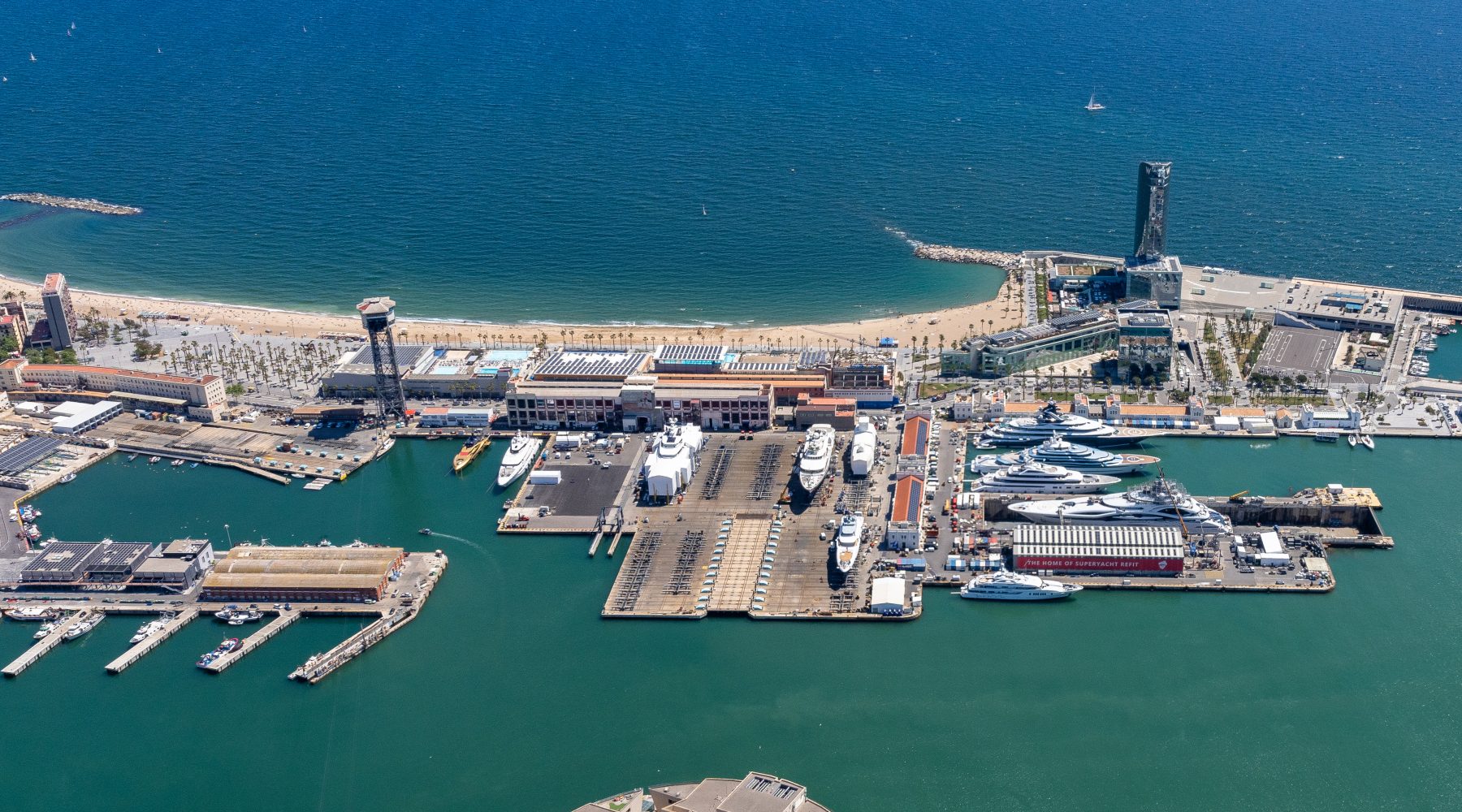
- Shipyard concession initially extended to 2050 with work on-going for further 5 year extension to 2055 and potentially longer
- New lifting capacity, improvement of existing legacy infrastructure and new hardstanding area for yachts up to 55 metres
MB92 Barcelona, a global leader in superyacht refit and repair, today announces that the Port of Barcelona has approved a ten-year extension of the existing shipyard concession as well as an increase in the shipyard area, paving the way for a new phase of growth and development.
As part of the agreement, the concession term has been initially extended to 2050 and the shipyard area will be increased by 4,000m². Between 2026 and 2028, MB92 will invest more than €40 million as part of a significant infrastructure development programme. It will extend quayside areas, introduce new technology, renew strategic infrastructure including the dry dock, and further reduce the shipyard’s environmental impact.
“This agreement gives us the space and long-term certainty allowing us to further invest in the shipyard to meet our clients’ needs in the years ahead. The additional capacity and improved infrastructure will provide more efficiency and further elevate service quality as we continue striving for excellence, enabling us to handle increasingly large and complex projects for our clients.”
Demand for superyacht refit, repair and maintenance work is at an all time high driven by an ever growing new-build order book and deliveries, coupled with the consistent demand from the existing fleet. This has led to increased activity at refit yards world-wide, reinforcing the need for the leading refit yards to invest in innovative and sustainable infrastructure in order to meet client demand.
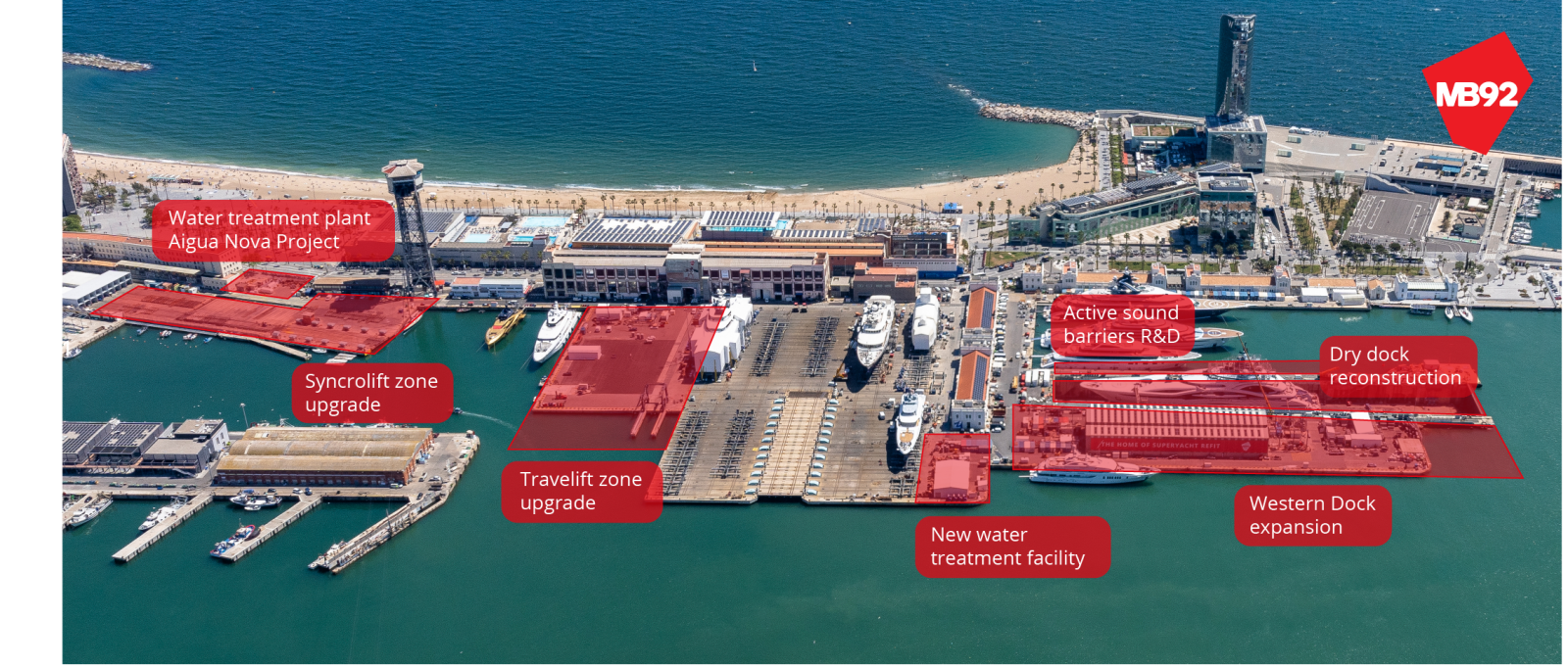
Since its inception almost 35 years ago, MB92 has continuously invested across all its yards and today, announces a further major infrastructure investment programme. One of the most important elements of this programme will be the redevelopment of the Travelift and Syncrolift area. A new 680-tonne telescopic Travelift will serve five hardstanding spaces for yachts up to 55 metres, providing more capacity as well as flexibility and efficiency for refits in this segment.
Furthermore, a new 110-tonne electric Travelift will provide dedicated lifting capacity for tenders and smaller support vessels – a segment that MB92 feels is critical for its clients.
As part of the investment programme, MB92 will also improve how water is collected, treated and ultimately reused across the shipyard. A new initiative, AiguaNova, launched in 2025, will recover greywater from the local leisure centre for uses including yacht washing, facility cleaning and cooling towers, while new wastewater-treatment and collection systems will reduce demand on freshwater resources and support the responsible management of increased activity.
Further work will focus on renewing other major infrastructure including the rehabilitation of the 220-metre Dry Dock together with the extension and reinforcement of quayside and operational areas at the Western Dock (Muelle Occidental). The programme also includes a study into the implementation of a new system designed to reduce the acoustic impact of shipyard operations.
Beyond 2028, MB92 plans to continue investing in its Barcelona facilities through the construction of new buildings and workshops, the redevelopment and modernisation of existing facilities and office spaces for employees, as well as the ongoing upgrade of key infrastructure across the shipyard. This next phase of investment beyond the current plan will allow MB92 Barcelona to apply for a further five-year extension of the concession through to 2055 with the possibility of a subsequent review allowing for an even further extension thereafter.
John Nery, Managing Partner and Head of Investments at Squircle Capital, concluded: “The Group has established a strong international reputation at the top of the refit market, built over more than three decades by staying close to its clients and evolving with their needs. This programme will help MB92 build on those strengths and further enhance the service it provides. The successful conclusion of the concession process is further testament to the strength of management and relationships with internal and external stakeholders including port authorities.”
Hello, how can we help you today?
- I want to request a quote
- I want to get in touch with an MB92 Barcelona representative
- I want to get in touch with an MB92 La Ciotat representative
- I want to get in touch with an MB92 Red Sea representative
- I want to know more about MB92 Red Sea
- I want to apply for a job vacancy
- I want to get directions