

How connected technologies could reshape yacht maintenance, the refit experience and seasonal challenges for shipyards.
For decades, the superyacht refit sector has operated to a familiar rhythm.
Owners maximise their time on the water before entering shipyards during relatively narrow maintenance windows. Captains, managers, contractors and shipyards work to tight deadlines, often compressing increasingly complex projects into a matter of months.
The model has served the industry well, but it has also created one of its greatest challenges: seasonality.
Every year, demand concentrates around the same periods. Shipyards face capacity constraints, owners compete for slots and specialist resources become stretched. As yachts grow larger, more technically sophisticated and more numerous, these pressures continue to intensify.
Technology will not remove the physical constraints that create seasonality. Cruising calendars will continue to determine when yachts are available, while major refit work will inevitably require physical infrastructure, specialist labour and time in the yard.
What digitalisation can change is the uncertainty that amplifies those seasonal pressures.
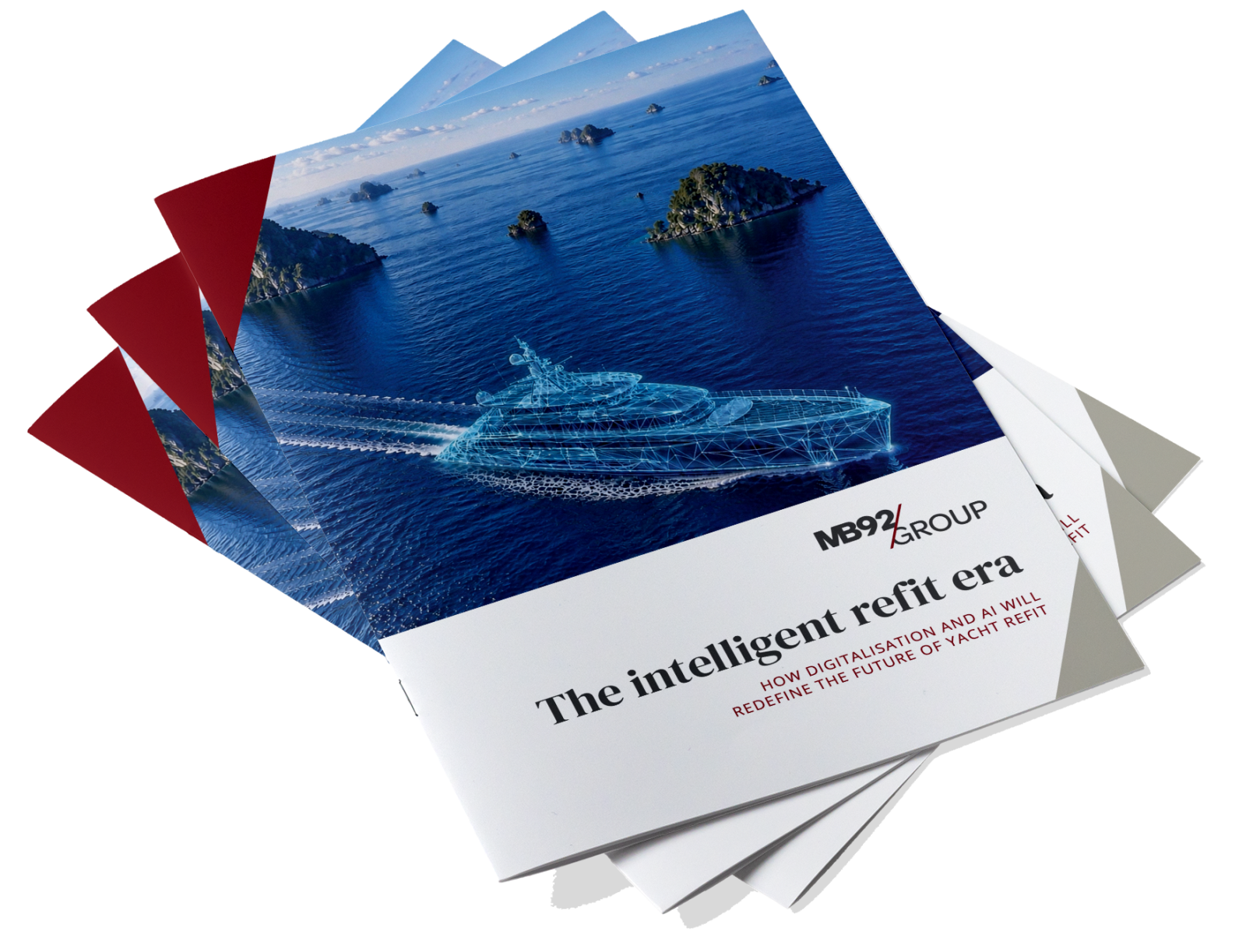
As explored in the recent MB92 Group report, The Intelligent Refit Era, improved connectivity, operational data and digital tools are creating the conditions for a gradual shift away from periodic, reactive interventions towards more continuous lifecycle management.
The yacht may still arrive at the shipyard seasonally. The work surrounding its refit increasingly does not have to.
The connected yacht
Over the last decade, yachts have become vastly more connected.
High-bandwidth satellite communications have transformed life at sea, enabling real-time collaboration between vessels and shoreside teams. At the same time, planned maintenance systems, sensor networks, remote diagnostics and energy management platforms have become increasingly common onboard.
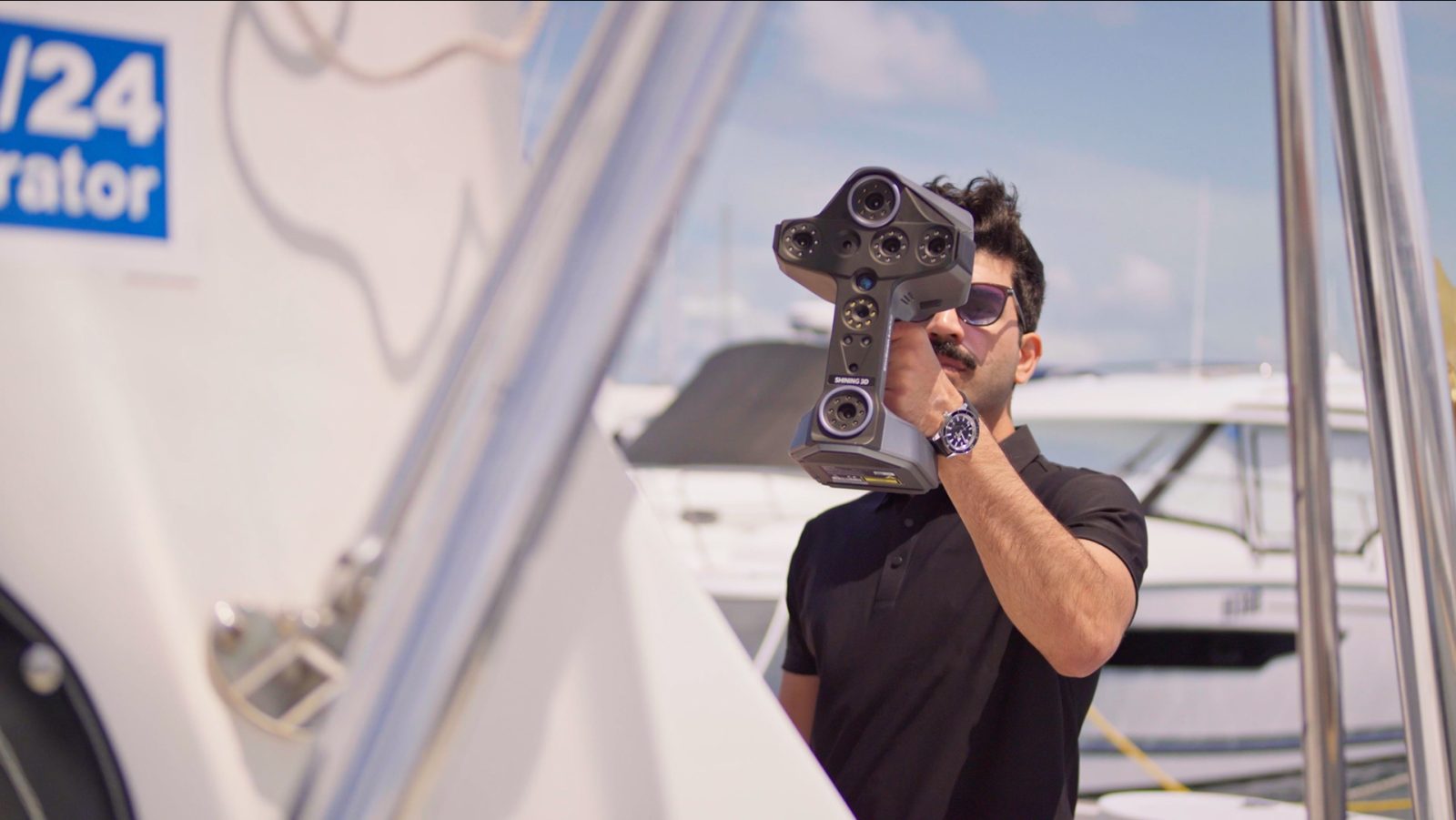
Today’s yachts generate vast volumes of operational information. Equipment performance can be monitored continuously, technical records can be accessed remotely and support can often be delivered without waiting for a yacht to enter the yard.
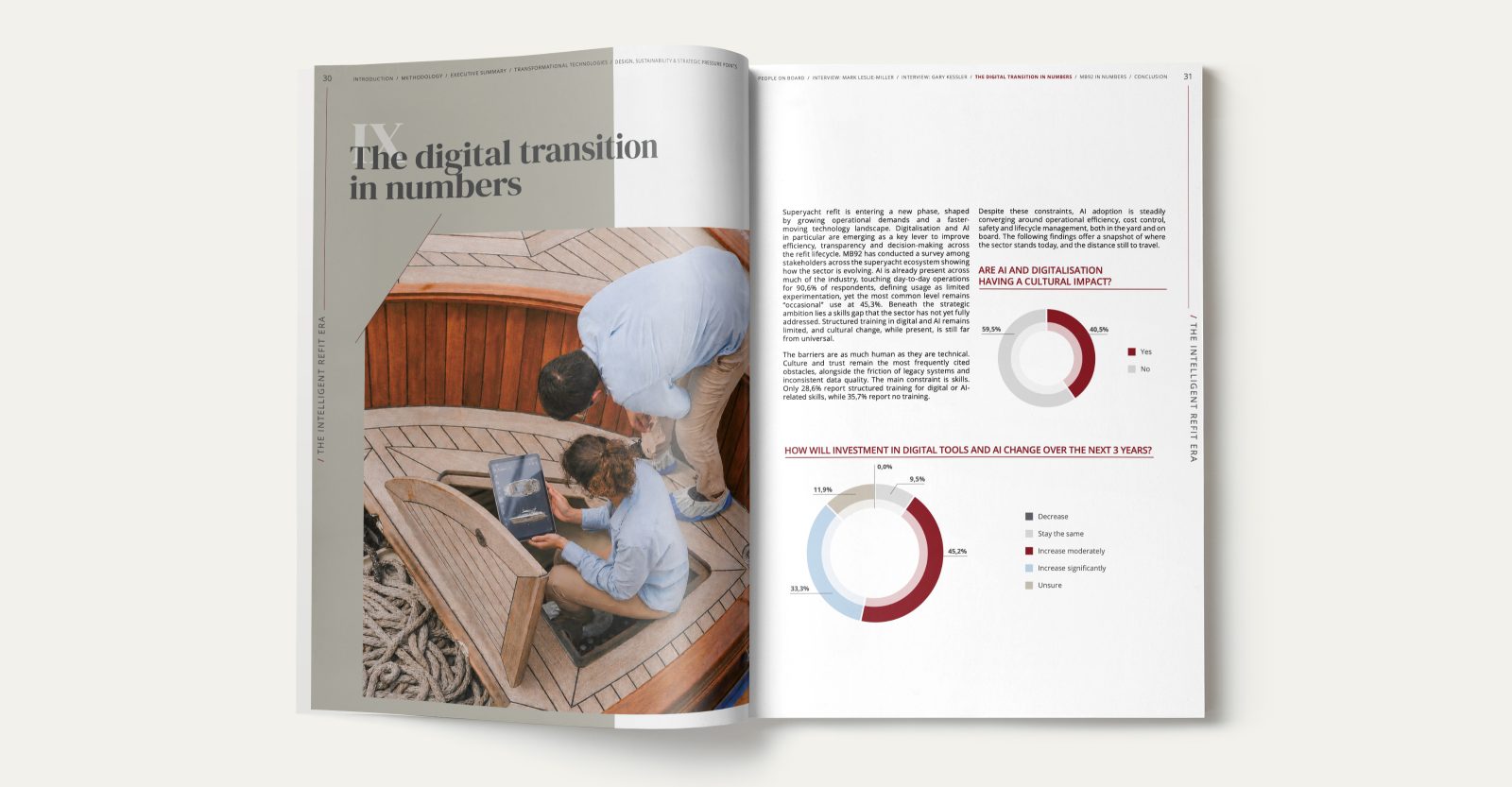
This evolution is reflected in industry sentiment. According to a survey conducted as part of the MB92 report research, nearly 79% of respondents expect investment in digital tools and AI to increase over the next three years, while 71% view AI primarily as an opportunity rather than a risk.
But the more significant change may not be the technology itself. It is what improved access to information makes possible.
Rather than treating refit as an isolated event, connected technologies create an opportunity for the relationship between yacht, manager, supplier and shipyard to become increasingly continuous.
Rethinking the maintenance cycle
Traditionally, refit has been driven by inspection and discovery.
Even with thorough preparation before arrival, projects often evolve once a yacht enters the yard. As systems are opened and new issues identified, project scopes can expand, placing additional pressure on schedules and resources.
This uncertainty contributes directly to many of the bottlenecks experienced across the sector.
Digitalisation offers an opportunity to reduce that uncertainty.
As monitoring systems become more sophisticated, potential issues can be identified earlier while a yacht is still operating. Performance trends can be analysed over time, maintenance requirements anticipated earlier and project planning started months before arrival.
Predictive maintenance is one of the clearest examples of this shift. Rather than waiting for equipment to fail or relying solely on periodic inspections, operators can make decisions based on actual asset condition.
The change may appear incremental, but its implications are significant, meaning that maintenance planning becomes less reactive and more strategic.
The question shifts from “What needs fixing this winter?” to “What should we be optimising over the next three years?”
The value of lifecycle intelligence
At the heart of this transition is what contributors to the report describe as “connected intelligence”: the integration of operational data, digital tools and human expertise throughout a yacht’s lifecycle.
In practical terms, it creates a continuous flow of insight between yachts and the teams supporting them.
Maintenance histories become easier to analyse. Recurring issues can be identified sooner. Equipment performance can be tracked over longer periods. Decisions become informed by evidence rather than assumptions.
Yet information alone is rarely enough. As yachts become increasingly complex assets, the ability to interpret data within the context of a vessel’s operational history becomes ever more important. The insights generated by connected technologies are most valuable when combined with practical experience gained through years of maintenance, repair and refit activity across multiple generations of yachts and equipment.
Digital twins are one of the most promising developments in this area, particularly as they evolve from static representations of the vessel into tools capable of supporting asset performance, maintenance planning and longer-term investment decisions. For owners, the benefits are tangible: less downtime, fewer unexpected failures, more predictable budgets and greater confidence when planning future investments.
In many ways, the greatest value may lie in connecting operational insight with real-world delivery experience. Understanding how equipment performs in service, how maintenance strategies evolve over time and how previous interventions influence future decisions requires knowledge built throughout the operational life of the asset. As a result, lifecycle management is becoming as much about accumulated expertise as it is about technology.
For shipyards, the implications are equally significant.
Can digitalisation reduce seasonal pressure?
The superyacht industry will always have seasons.
Owners will continue to plan significant maintenance around cruising schedules and major refit projects will remain concentrated around key points in the calendar.
Continuous lifecycle management will not necessarily change when a yacht physically arrives at the shipyard. What it can change is how much work, planning and decision-making has to be compressed into that period.
- If maintenance requirements are identified earlier, engineering and project planning can begin sooner.
- If scopes are better defined, specialist labour and infrastructure can be allocated with greater confidence.
- If procurement begins months rather than weeks in advance, long-lead items and supply-chain risks can be managed more effectively.
- If yards gain earlier visibility across a pipeline of future projects, they can improve capacity forecasting, supplier mobilisation and resource planning.
And where appropriate, technical support, diagnostics, documentation and other activities can take place outside the principal physical yard period.
In this sense, digitalisation does not eliminate seasonal demand. It can help reduce the uncertainty that makes seasonal peaks particularly challenging.
That distinction matters. More than one-third of the approximately 6,000 yachts over 30 metres worldwide visited refit shipyards during 2024. As the fleet grows and yachts become increasingly complex, the challenge is not simply to add more physical capacity. It is also to use existing capacity and the wider supplier ecosystem more intelligently.
A better refit experience
Ultimately, owners do not measure the success of a refit by the technologies used to deliver it.
They measure it by the experience.
Was the project well managed? Were they kept informed? Were decisions made with confidence? Did the process feel transparent, predictable and under control?
This is where digitalisation has the potential to create meaningful value.
By identifying issues earlier, improving scope definition and providing greater visibility throughout a project, technology can help reduce some of the uncertainties that come with refits.
For owners and their representatives, this means fewer surprises and greater confidence in decision-making. For captains and managers, it means better access to information and easier coordination between stakeholders. For shipyards, it creates opportunities to provide a more responsive and transparent service.
The most successful applications of technology are likely to be those that remain largely invisible, simplifying processes behind the scenes while improving the overall client experience.
Data as a strategic resource
None of this is possible without reliable data.
One of the report’s key findings is that the industry remains at a relatively early stage of digital maturity. While 66.7% of organisations surveyed have some form of digital strategy, only 19% have a formal strategy supported by dedicated budget. Just 16.7% describe their operational data as advanced and ready to support real-time decision-making.
The challenge is not a lack of data, but its fragmentation. A highly customised yacht may generate large volumes of information across equipment manufacturers, management systems, suppliers and project stakeholders, without necessarily providing a coherent view of the asset as a whole.
Yet the value of solving this problem is becoming clear.
Operational data is no longer simply a record of past activity. It is becoming a strategic resource that helps owners, managers and shipyards make better decisions about maintenance, investment and long-term asset performance.
A changing relationship between yachts and shipyards
As access to information improves, the relationship between yacht and shipyard is also evolving.
Historically, engagement has centred around individual projects. However, as yachts become more connected and technically sophisticated, owners increasingly require support that extends beyond any single maintenance period.
The opportunity for specialist refit shipyards is no longer simply to execute projects efficiently, but to apply the knowledge gained from years of maintaining, repairing and upgrading yachts throughout their operational lives.
This shift is already influencing how information is shared with clients.
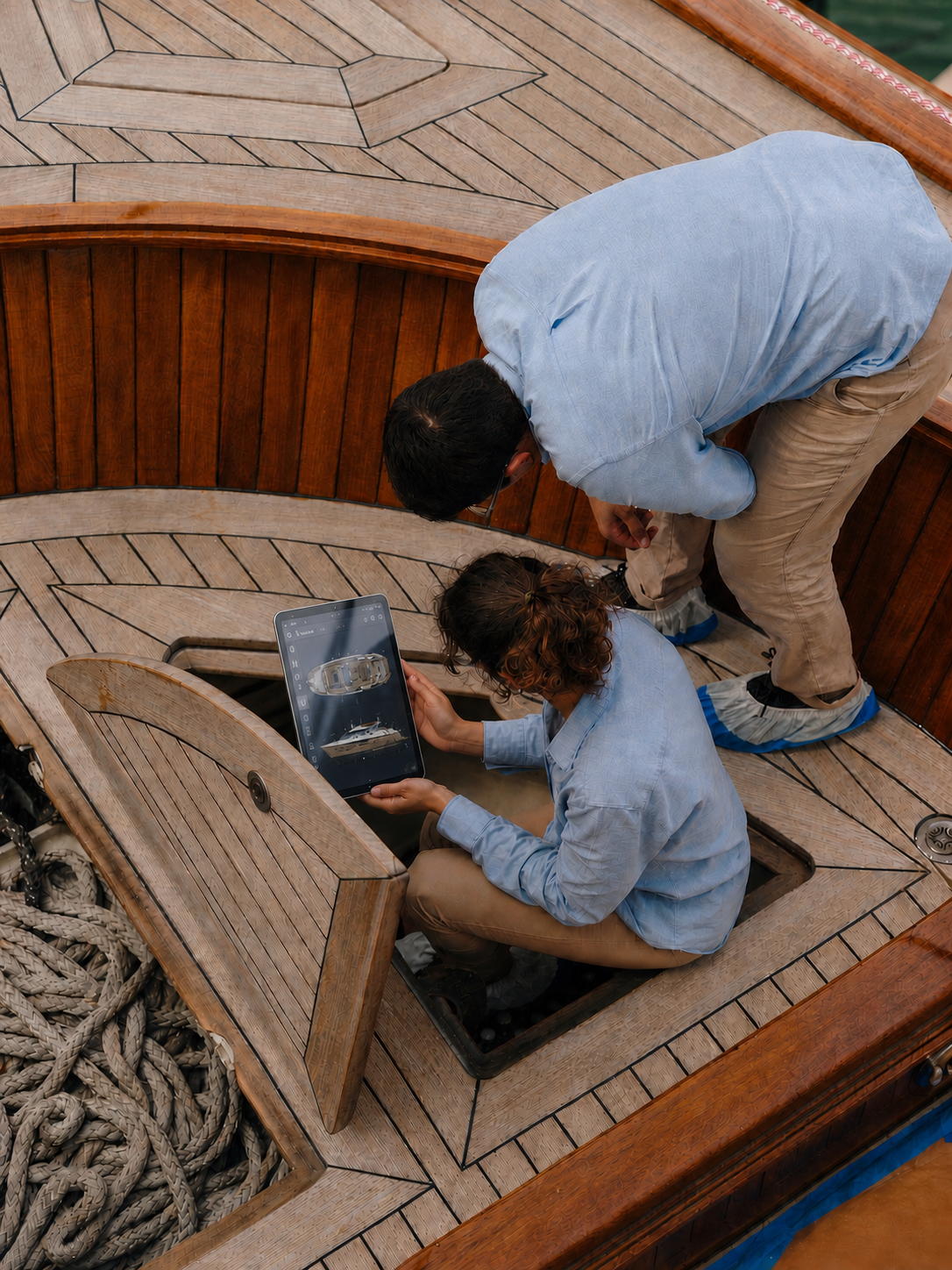
Owners and representatives expect greater transparency, easier access to documentation and clearer visibility throughout the refit process. In response, digital platforms are emerging that centralise project information and improve communication between stakeholders.
At MB92, this perspective has informed investments in both digital tools and processes designed to enhance transparency, collaboration and continuity throughout the refit experience. One example is The Bridge, a digital platform that centralises project information and facilitates communication between owners, captains, managers and project teams throughout a refit project. Since its launch in 2023, more than 480 projects have been managed through the platform.
The wider significance extends beyond any individual solution.
As vessels become more complex and data-rich assets, owners are likely to place increasing value on partners capable of combining technical expertise, project experience and operational knowledge accumulated over many years. The real opportunity is not simply to digitise individual projects, but to use information more effectively to support better decisions throughout a yacht’s lifecycle.
This is where specialist refit expertise can play a unique role. Every maintenance period, upgrade and technical intervention contributes to a deeper understanding of how yachts evolve over time, creating insight that can help owners plan with greater confidence, optimise investment decisions and enhance long-term asset performance.
Technology supports people
Despite the growing role of digitalisation, one conclusion from the report stands out clearly.
Technology delivers the greatest value when it supports human expertise rather than attempts to replace it.
Predictive maintenance can identify trends. Digital twins can model performance. Artificial intelligence can process information at scale. However, complex refit decisions still depend on experienced engineers, project managers, captains and technical specialists capable of turning information into action.
As yachts become more sophisticated, those skills become even more important.
The challenge ahead is therefore not just technological. It is also cultural. The industry must continue investing in training, digital literacy and the capabilities required to operate in an increasingly data-driven environment.
Looking beyond the yard period
The greatest opportunity presented by digitalisation may therefore be broader than AI, predictive analytics, connected sensors or digital twins individually.
It is the possibility of changing when refit begins and ends. The yacht may still enter the shipyard according to a seasonal calendar, but the refit process no longer needs to begin and end at the shipyard gates.
As yachts generate richer operational histories, the competitive advantage will not come from access to more data alone. Increasingly, value will be created by the ability to transform that information into better maintenance, refit and investment decisions over time.
Technology will undoubtedly play a critical role in that transition. But technology alone cannot replace the practical knowledge gained through decades of maintaining, repairing and modernising complex yachts.
In this respect, digitalisation does not diminish the importance of specialist refit expertise. It reinforces it. The organisations best positioned to support owners in the future are likely to be those capable of combining digital insight with a deep understanding of how yachts evolve throughout their operational lives.
Complete the form below to receive access to the report. A link will be sent directly to your inbox. Thank you for your interest in MB92’s industry research.
Hello, how can we help you today?
- I want to request a quote
- I want to get in touch with an MB92 Barcelona representative
- I want to get in touch with an MB92 La Ciotat representative
- I want to get in touch with an MB92 Red Sea representative
- I want to know more about MB92 Red Sea
- I want to apply for a job vacancy
- I want to get directions